Blog

  • Risk modeling @ AGRE

    Risk modeling @ AGRE

    The objective of the project was to assess the relevance of the AGRE Risk model’s original calibration and assumptions in the context of the current economic climate.

    We investigated whether the model calibration performed during a low interest rate and moderate inflation economic environment is still relevant for the estimation of SCR risks and proposed adaptations to the model.

    The work was split in two macro phases:

    • Exploratory Phase
      • The objective was to collect the information about the evolution of the risks and current (post Covid) business environment from AGRE professionals
    • Implementation Phase
      • The objective of this phase was to translate the business and risk opinions, as well all other requirements emerged during the exploratory phase, into concrete modifications and updates of the Boni Mali Risk model.

    We performed the tasks and updated the relevant risk drivers identified by economists and real estate experts such as:

    • Cost of borrowing
      • Rapid interest rate hikes by central banks have increased the returns on risk-free government bonds. Commercial real estate investors demand more yield to justify holding such an illiquid asset. Rising rents can offset some of the impact on valuations. But the magnitude of the yield increase triggered by the sudden end of near-zero rates has overwhelmed whatever rent increases landlords can achieve.
    • Rising Vacancy Rates
      • This indicates a challenge in finding new tenants as old leases expire, and it puts downward pressure on rental prices and property values.
    • Refinancing Cliff
      • The commercial real estate market is facing a significant refinancing challenge in the coming years. Many commercial mortgages are due for refinancing, and with higher interest rates and increased vacancies, property owners may struggle to secure favorable refinancing terms. This could lead to defaults and financial instability in the market.
    • New regulations
      • New rules and regulations making it very expensive to refurbish and at the same time difficult to rebuild. Added to increased cost of construction. That puts downward pressure on the valuation of existing non-prime buildings

    Output

    The updated model was delivered as well as the necessary documentation and formation of stakeholders.


  • Forestbase

    Forestbase

    Modeling the Value of Nature: How We Helped Forestbase Unlock the True Worth of Forest Assets

    The Challenge

    Forests play a vital role in the planet’s ecological balance, yet their market valuation often fails to reflect this.

    Fragmentation, legal complexities, and limited liquidity have historically made forests difficult to price and even harder to transact.

    Forestbase approached us with a bold goal: build a model that could quantify not only the immediate economic value of forests, but also their unrealized potential as financial assets in an evolving market.

    Our Solution: The Forestbase Valuation Model

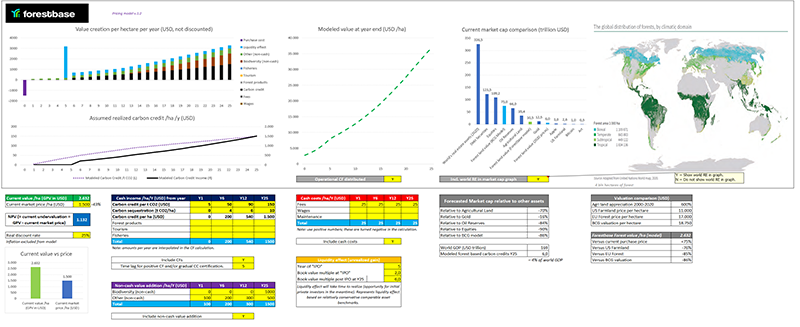
    We developed a hybrid financial model that integrates both traditional and forward-looking valuation techniques. Implemented in Excel for accessibility and transparency, the Forestbase Valuation Model is designed to evaluate forests at both a micro (individual investment) and macro (global asset class) level.

    Key Components:

    • Discounted Cash Flow (DCF): Captures direct economic returns, including carbon credits and sustainable forest product revenues. This aligns with growing government incentives aimed at transforming forests into yielding assets.
    • Valuation Growth Component: Projects the appreciation in asset value stemming from increased market access and improved liquidity, especially as initiatives like Natural Asset Companies (NACs) begin to take shape.

    This dual approach allows stakeholders to assess the full spectrum of a forest’s value—from immediate returns to future potential driven by regulatory and market evolution.

    Flexibility for the Future

    The model is built to adapt. It accommodates bespoke inputs for specific forests or generalized assumptions for global estimates. This flexibility ensures it remains relevant as new data, policies, and market mechanisms emerge. A centralized Dashboard interface makes calibration and scenario analysis intuitive, while a Present Value (PV) sheet powers the core calculations.

    Additionally, the model includes a benchmarking tool that compares the market capitalization of forests—based on output valuations—with other major asset classes like equities, gold, and farmland. This provides valuable perspective for institutional investors exploring diversification into natural capital.

    Why It Matters

    The Forestbase Valuation Model is more than just a spreadsheet—it’s a step toward redefining how we value the natural world. By enabling transparent, scenario-based pricing of forests, we are helping to catalyze the development of a liquid, investable market for natural assets. This is critical not just for investors, but for global sustainability.

    Ready to Rethink Nature as an Asset?

    If your organization is exploring innovative ways to integrate natural capital into its investment or sustainability strategies, we’d love to talk. Whether it’s designing valuation tools, modeling complex financial instruments, or advising on ESG-aligned investments, our team brings deep domain expertise and a track record of results.

    Let’s build the future of sustainable finance—together.

  • Arboral

    Arboral

    Strategic Financial Consulting for Arboral’s Expansion

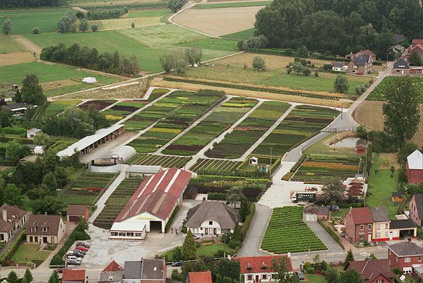
    At Exmetrica, we specialize in helping businesses turn ambition into actionable strategy. When Arboral, a respected tree plantation based in Erpe-Mere since 1948, approached us to evaluate the financial viability of their expansion plans, we were honored to be chosen to support a company whose roots in quality, service, and growth run deep.

    The Client: Arboral Tree Plantation

    For over 75 years, Arboral has provided top-quality trees and plants to a wide network of customers—from local garden centers and landscapers to international wholesalers and private gardeners. With a strong tradition of craftsmanship and a reputation for reliability, the company has steadily grown by investing in relationships, expertise, and infrastructure.

    Now, faced with increased demand and new market opportunities, Arboral sought to expand operations—and needed a trusted partner to assess the strategic and financial implications of that growth.

    The Assignment: Making Growth Make Sense

    Our mandate was clear yet multifaceted:

    • Analyze the financial feasibility of Arboral’s planned expansion, including land acquisition, infrastructure development, and workforce scaling.
    • Identify capital allocation strategies to ensure long-term sustainability and return on investment.
    • Provide a clear roadmap for how the company could grow without compromising the values that made it successful.

    We approached this with a blend of financial modeling, scenario analysis, and market benchmarking tailored to the nuances of the tree cultivation and wholesale sector.

    Our Approach

    We began by diving into Arboral’s operational data—cost structures, revenue streams, seasonal cycles, and customer segments. Using this foundation, we built a dynamic financial model that simulated several expansion scenarios, accounting for variables like land costs, labor, logistics, and international trade dynamics.

    Crucially, we also examined capital allocation options, from reinvested profits to potential financing avenues, weighing their impact on cash flow, risk exposure, and ownership structure.

    The Outcome: Insight-Driven Growth

    The outcome was a clear, data-backed picture of Arboral’s expansion potential. We identified a financially viable path that would allow Arboral to:

    • Increase production capacity by over 30% within three years,
    • Serve a growing international client base more efficiently,
    • Strengthen their logistics and delivery capabilities without overextending operational risk.

    Our analysis also highlighted opportunities to optimize capital use—balancing internal investment with low-risk financing options that preserved control and flexibility.

    A Stronger Foundation for the Future

    With our financial roadmap in hand, Arboral is now moving confidently toward the next phase of their journey—expanding their legacy of quality and care while staying grounded in sound financial strategy.

    We’re proud to have played a part in helping this family-rooted business thrive in a competitive and ever-evolving market.

    Let’s Talk Growth

    Whether you’re a long-standing enterprise like Arboral or a startup with bold ambitions, we’re here to help you grow wisely. Our team brings deep sector knowledge and a pragmatic, data-first approach to financial consulting and modeling.

    Let’s plant the seeds for your next big move.

  • Febelfin Academy

    Febelfin Academy

    Bridging the Gap Between Operations and Finance: A Training That Empowers Financial Decision-Making

    At Exmetrica, we believe that strong financial analysis starts with a deep understanding of how businesses truly operate. Numbers tell a story—but only if you know how to read them in the context of real-world business dynamics.

    That’s why we were proud to recently deliver a specialized training course designed to bridge the gap between operational reality and financial insight, empowering professionals to better understand and evaluate the companies they work with.

    A Mission to Elevate Financial Understanding

    This full-day session was developed for financial professionals who want to go beyond the spreadsheet and gain meaningful insight into what drives company performance. We welcomed participants from a wide range of roles—loan officers, financial analysts, auditors, credit modellers, risk managers, and more—all united by a shared goal: to strengthen their ability to analyze businesses with greater clarity, accuracy, and impact.

    Whether assessing a company for lending purposes, rating risk, or structuring covenants, this training offered the tools to interpret financial statements not as isolated documents, but as reflections of underlying business models, operational choices, and strategic decisions.

    What We Covered

    The course followed a carefully structured program that moved from theory to practice, covering:

    • Operational Analysis:
      How different business models, ownership structures, sectors, and strategies influence company performance and risk. Participants explored how to identify operationally relevant factors—from supplier concentration to political risks—and understand their impact on financial health.
    • Financial Statements and Key Ratios:
      We broke down the structure and logic behind the Profit & Loss, Balance Sheet, and Cash Flow statements, offering a practical framework to interpret metrics like EBITDA, net leverage, interest cover, and free cash flow in real-world settings.
    • Credit Assessment and Covenants:
      A deep dive into credit requests, capital structure, and covenant frameworks, with a focus on understanding what lenders and stakeholders really look for when evaluating a company’s resilience and repayment capacity.
    • Case Studies and Practical Exercises:
      Throughout the session, we anchored learning in real-life case studies, guiding participants through combined operational and financial analysis of companies across different industries. These hands-on moments sparked valuable discussion and sharpened critical thinking.

    Why This Matters

    In today’s fast-moving financial landscape, it’s not enough to look at numbers in isolation. True financial acumen means connecting ratios to realities—tying a cash flow shortfall to an operational bottleneck, or recognizing how a group’s structure impacts risk exposure.

    By helping participants make these connections, we’ve equipped them to:

    • Evaluate businesses more holistically;
    • Communicate insights more effectively to stakeholders;
    • Make smarter, risk-aware lending and investment decisions.

    A Proven Approach, Real Impact

    Feedback from attendees was overwhelmingly positive, with many highlighting how the training offered a refreshingly practical and applicable perspective. Whether just starting out or bringing years of experience, participants walked away with sharper tools and greater confidence in tackling complex company evaluations.

    Invest in Financial Intelligence

    If you or your team work in credit, lending, analysis, or audit, this training can be a transformative investment. We tailor our programs to your industry and level of experience, always blending conceptual rigor with hands-on practicality.

    Let us help you or your organization develop the insight to make more informed, strategic financial decisions.

    📩 Get in touch to learn more or schedule a custom training.